
If you’re someone who loves exploring new places or curious about how cities evolve, futuristic cities 2026 offer a glimpse into what the future holds. These aren’t just about high-tech gadgets; they embrace smart city designs that help save time, energy, and even promote kindness in communities. From electric buses to homes that talk to you, these cities show how we can live better and help the Earth at the same time. Let’s take a friendly tour of what makes these cities special and meet some of the coolest places shaping the future.
Why Smart Cities in 2026 Are Changing How We Live
Cities today are trying to be more than just places full of buildings and roads. Futuristic cities 2026 focus on making life easier, healthier, and more balanced. One big part of this is the use of IoT technology — which stands for Internet of Things. This means many everyday objects, like streetlights or water taps, are connected to the internet. They can "talk" to each other to save energy or alert people when something needs fixing. It’s like giving the city a smart brain.
Another important idea for these cities is called the “15-minute city.” This means everything you need—like shops, schools, parks, and workplaces—is close enough to reach by walking or biking in about 15 minutes. This way, people can spend less time stuck in traffic or using cars. Telosa in the United States is a great example, designed to give residents easy access to all daily needs nearby while keeping the environment safe.
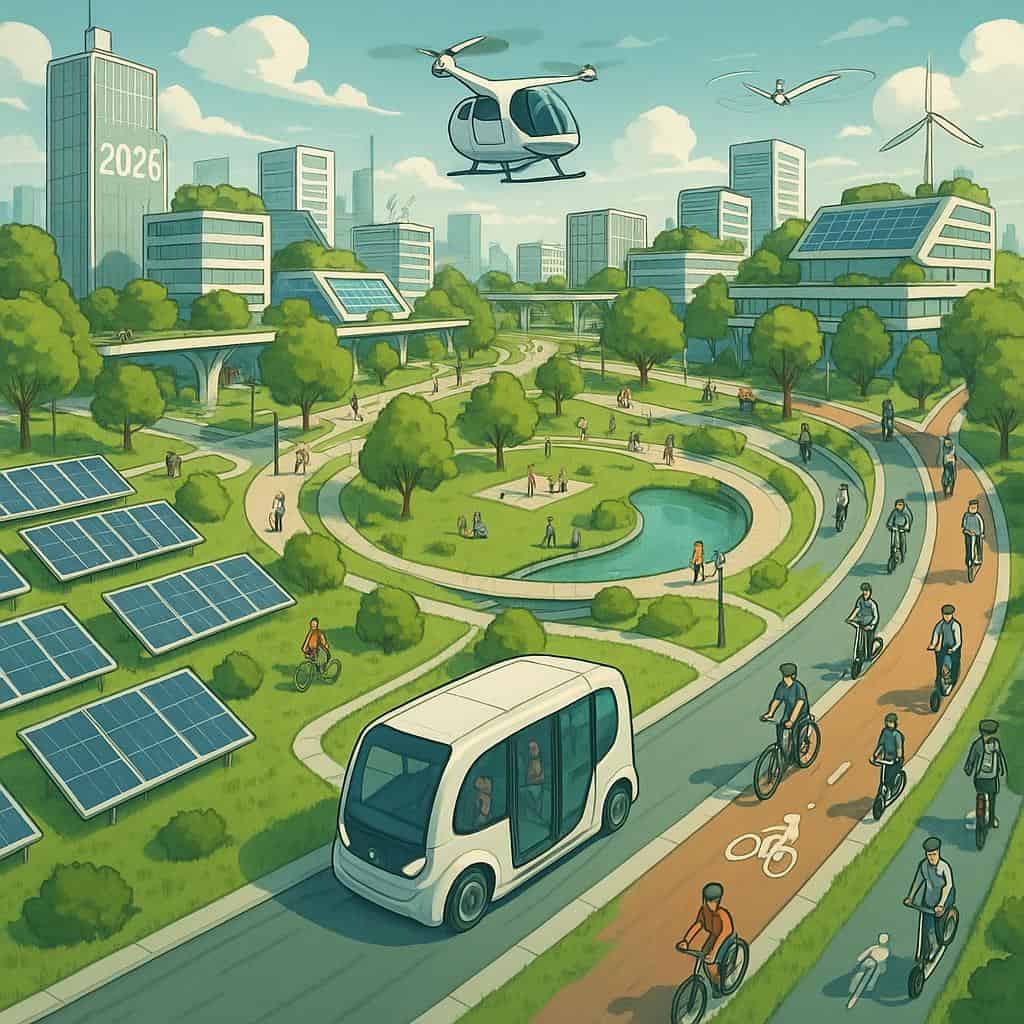
Sustainability is also a top priority in futuristic cities 2026. That means cities plan in a way that protects nature, uses renewable energy like wind or solar power, and keeps air and water clean. It’s not just about technology but also about making sure the planet is healthy for future generations. These cities include green spaces, bike paths, and electric vehicles to help reduce pollution. If you want to learn more about enjoying green spaces safely in urban areas, you might find our guide on enjoying nature safely useful.
Exploring Some of the Most Exciting Futuristic Cities Today
There are several standout cities leading the way toward a smarter and greener future. Each focuses on using technology, smart infrastructure, and creative urban planning to improve lives in unique ways.
Telosa, USA: A City Built for Everyone
Telosa is a city planned in the U.S. desert, designed by the famous architect Bjarke Ingels. This city is special because it builds on ideas like fairness and caring for everyone who lives there. It’s huge—enough space for up to 5 million people! What makes Telosa cool is the “15-minute city” layout that allows people to walk or bike to most places without needing a car.
Telosa also uses autonomous electric shuttles, which are little driverless buses, to get around easily. Smart sensors monitor things like water use and garbage to make sure resources aren’t wasted. To keep everything running safely, strong cybersecurity protects the city from hacking, keeping residents’ information and city services secure.
Masdar City, UAE: A Leader in Clean Energy
Masdar City in the United Arab Emirates has been working toward clean and renewable energy for years. It’s designed to be low-carbon, meaning it produces less pollution. The city’s IoT devices help control air quality, energy usage, and waste, creating a healthy environment.
People there use electric, driverless vehicles to move around a city that’s mostly car-free. Masdar aims to cut energy and water use by almost half, making it a smart city that protects precious desert resources.
Shenzhen, China: A Hub of Innovation and Speed
Shenzhen is a high-tech marvel, known for its fast growth and many tech companies. The city is famous for rapid innovation, with new gadgets and smart hardware created daily. Around the clock, factories and labs work to bring ideas to life quickly, powered by AI and IoT technology.
This bustling city has become a symbol of how technology and urban living blend to create a vibrant high-tech city. It’s home to big names like Huawei and DJI, showing how innovation hubs thrive when they mix creativity with smart urban planning.
Smart Forest City, Cancun, Mexico: A City Wrapped in Green
Imagine a city covered in plants—7.5 million plants, to be exact! That’s the Smart Forest City near Cancun. Designed by Stefano Boeri, this city shows how nature and urban life can come together. Trees and plants cover buildings and streets to soak up carbon dioxide and provide fresh air.
Instead of heavy traffic, people get around on electric buses, bikes, and water taxis. The city uses renewable energy from solar panels and has sensors that help prevent disease spread and manage resources efficiently. The city is self-sufficient, meaning it can produce enough food and energy for its residents.
Amaravati, India: Growing Green and Connected
Amaravati, planned by architects Foster + Partners, is a new capital city with a strong focus on green spaces—about 60% of the city will be covered in trees and water. The city smartly uses IoT devices to manage energy, traffic, and waste, helping keep things safe and smooth.
Eco-friendly transport like electric buses and bike paths makes moving around easy and clean. The city also takes cybersecurity seriously to protect its data and keep residents secure.
Toyota Woven City, Japan: Testing Ground for New Technology
Woven City is a unique project near Mount Fuji, Japan, created by Toyota and architect Bjarke Ingels. It’s a real-life laboratory where researchers test autonomous vehicles, hydrogen power, and robots. Homes are smart and connected, with solar panels and sensors all around.
The city aims to be carbon-neutral and uses advanced cybersecurity to keep people’s data safe. It’s a place where the future of personal mobility and AI comes alive in daily life.
Songdo, South Korea: A Fully Functional Smart City
Songdo was one of the first smart cities and still impresses with its use of IoT devices to manage traffic, energy, and waste. Around 40% of the city is green space. The city uses energy-efficient buildings and offers autonomous buses and bike-sharing to reduce pollution.
While some say the city feels very planned and quiet, its infrastructure makes it a model for smart and sustainable urban living.
How Technologies Bring Life to Smart Cities
What ties these futuristic cities 2026 together is the clever use of technology and smart planning. IoT technology acts as the city’s nervous system, connecting sensors and devices to monitor energy, water, and waste. This constant data flow helps fix problems quickly and save resources.
Renewable energy from wind, solar, and sometimes hydrogen powers these cities to reduce pollution. Electric, autonomous vehicles offer clean, easy ways to move, cutting down on traffic and emissions.
At the same time, advanced cybersecurity protects residents' data and the city’s systems, keeping everything safe from cyber threats. Urban planning ideas like green corridors and the 15-minute city make daily life more comfortable and environmentally friendly.
Together, these technologies create cities that are not only smart, but welcoming and thoughtful places to live.
What Futuristic Cities Mean for the Future
The cities we see developing now serve as blueprints for towns and cities yet to come. They show us how technology and sustainability can work hand in hand to improve lives.
But these cities are more than science projects. They test new ways to make fair societies, where everyone can enjoy good living without harming the planet. Imagine land ownership that benefits the whole community or cities where everything is shared and reused.
There are challenges, like making sure these ideas work financially and fit different cultures. Still, the lessons learned here will likely influence how we build homes, towns, and maybe even space habitats in the future.
Many travelers and explorers will find these cities inspiring, offering new high-tech destinations that blend innovation, nature, and culture. For those who love exploring nature and urban environments alike, our guide on enjoying nature safely provides great tips on how to appreciate green spaces responsibly.
Living in or visiting futuristic cities 2026 may inspire us all to think differently about how we connect with the world around us.
Cities are becoming more than just places to live—they’re becoming smart companions on the journey toward a better, cleaner future.
So, whether you dream of walking through tree-covered streets, riding a driverless shuttle, or simply seeing how the future looks, keep an eye on these innovative places. The way we live is changing fast, and the cities in 2026 are leading the path. Why not be part of this exciting journey?
